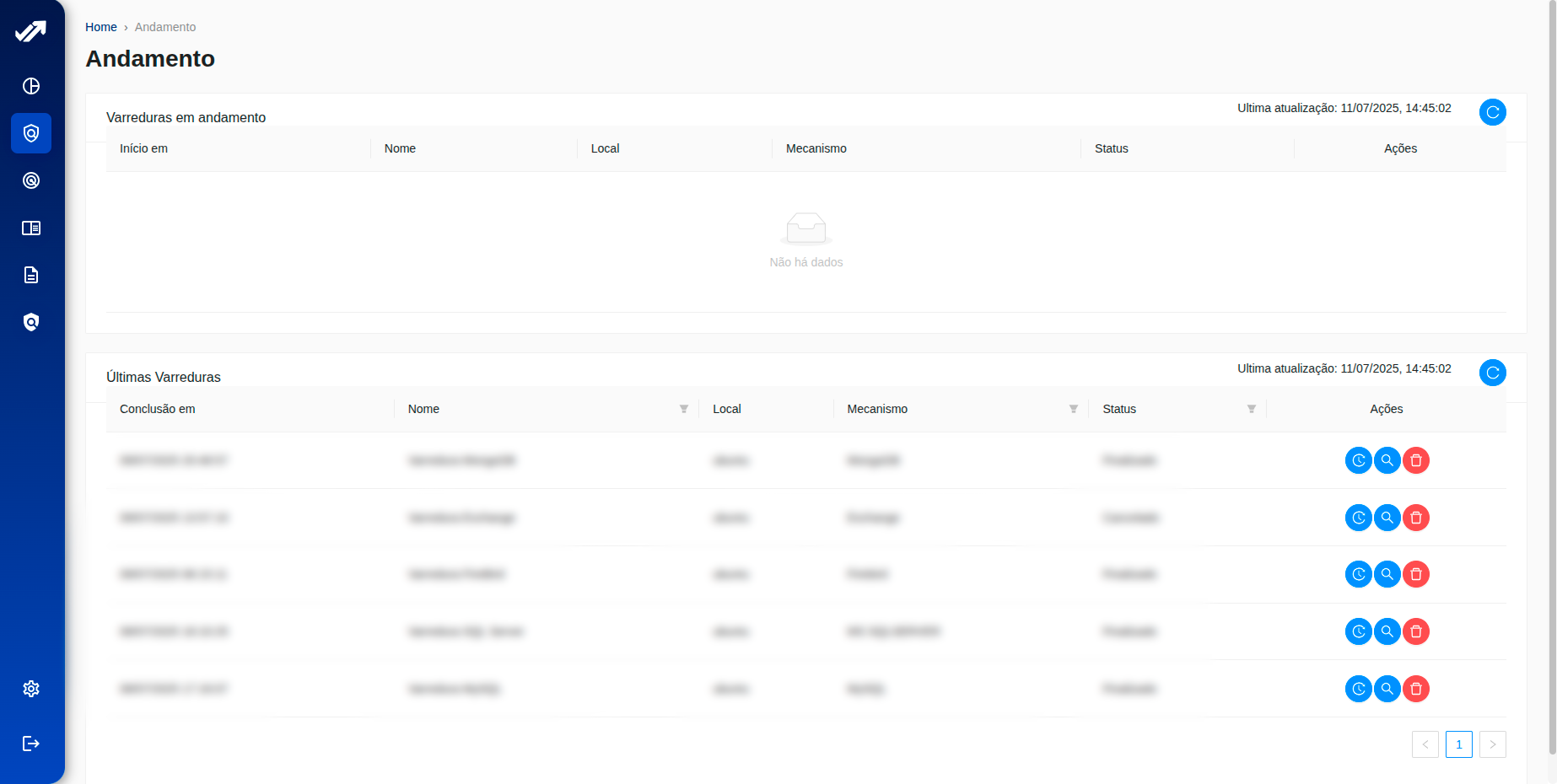
Audit Management is the module of Privacy Tools that plans, executes, and documents internal and external audits based on LGPD, GDPR, ISO, and its own frameworks.
Plan, implement, and monitor internal or external audits based on standards such as LGPD, GDPR, ISO, and customized frameworks.
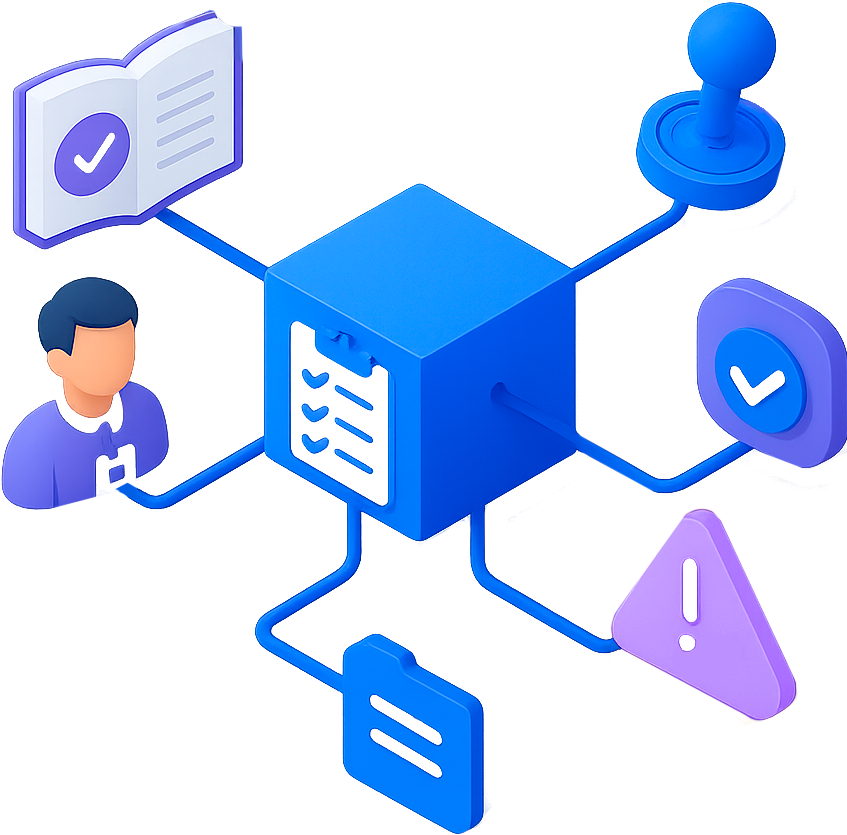
Audits are essential steps in mature privacy programs, as they allow companies to test, validate, and verify the effectiveness of the technical and organizational measures they have adopted.
With the Audit Management feature of Privacy Tools, your company can:
Explore the features that make this solution complete, practical, and efficient.

Configure one-off or recurring audit cycles, with deadlines, scopes, and areas involved.
Use frameworks such as LGPD, ISO, or import your own templates for evaluation.
Record results, documents, and observations directly on the platform, with version control.
Define auditor profiles, distribute responsibilities by competency, and ensure impartiality.
Track each step of the audit process with auditable records and an action trail.
Identify problems, track corrective action plans, and document evidence of treatment.
This module is suitable for organizations that need to test and prove, methodically, the effectiveness of their privacy and security program: companies undergoing certifications (ISO/IEC 27001, 27701), regulated institutions (banks, cooperatives, insurance companies, healthcare, energy), public bodies subject to oversight, groups with many units, and companies that are audited by clients as data operators. It is used by internal audit, compliance, information security, and data protection officers (DPOs), as well as by consultancies that audit clients.
The art. 50, § 2º, I, “d” and “i”, of LGPD It stipulates that the governance program be evaluated and "constantly updated based on information obtained from continuous monitoring and periodic assessments." ISO / IEC 27001 (clause 9.2) and the ISO / IEC 27701 They require planned internal audits, with criteria, scope, impartial auditors, and handling of non-conformities. GDPR (art. 39) includes auditing among the DPO's responsibilities.
Audits start with risks (Risk Management), verifying the activities of Data Mapping, consult the records of Incident Management, Consent Management and the Capacity as evidence, and generate nonconformities that become tasks in WorkflowThe report for each cycle, with versioned evidence, is the document delivered to certification bodies, councils, and regulators.
A Mills sought "more than just meeting audit requirements" when adopting the platform, and the Copel The governance program was structured in accordance with Article 50 of the LGPD (Brazilian General Data Protection Law), which requires periodic evaluation. See the... success cases.
Yes. The feature allows you to configure audits with different scopes, assigning auditors by area, topic, or technical criteria.
Yes. Privacy Tools It offers templates based on LGPD, ISO, and other frameworks, and also allows you to create your own templates.
Yes. It is possible to register non-conformities, set deadlines, and assign responsibility for corrections.
Yes. The functionality connects to Risk Management, allowing for the prioritization of audits based on the score or criticality of mapped risks.
The diagnosis is a maturity questionnaire answered by the area or supplier. The audit is the verification performed by designated auditors, with evidence, approval workflow, and non-conformity records. The diagnosis helps decide what to audit.
Yes. The standards and control templates include ISO, and it's possible to import your own set of controls. Internal audits required by the standard are planned, executed, and documented on the platform.
Based on profiles and the assignment of auditors by area, topic, or criterion: the organization defines who audits what, and the approval workflow records who performed and who approved each step.
It is registered with a deadline and assigned the person responsible for its correction, and its handling is monitored until closure. Corrections can become automated tasks in the Workflow and risks in Risk Management.
Yes. Cycles can be one-off or recurring, with a defined periodicity, keeping a record of each cycle for comparison.
Request a demo and see how the Audit Management feature can support your company's governance and compliance.