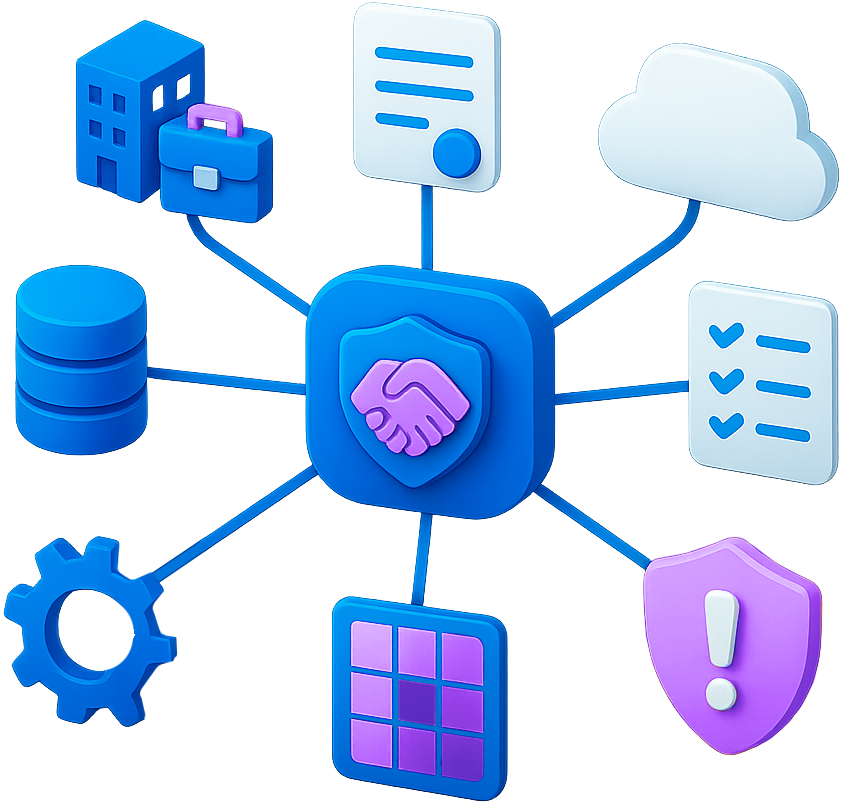
Third-Party Risk Management is the module of Privacy Tools which registers suppliers and operators, applies assessments, and monitors the risk of each relationship throughout the contract.
Suppliers, data operators, strategic partners: all represent potential risks to your company's privacy and compliance.
With Privacy ToolsYou structure a continuous third-party risk management process, based on objective criteria, integration with diagnostics, and complete visibility for decision-making.
Outsourcing services, contracting cloud platforms, and sharing data with operators make managing external risks a priority.
With Privacy Tools, you may:
Explore the features that make this solution complete, practical, and efficient.

Bring your supplier base with automatic links to treatment areas and types.
Use customized forms to evaluate suppliers and generate risk scores.
Organize risks by impact, probability, status, type of service, or criticality.
Define responsibilities, deadlines, and mitigating actions with approval workflows.
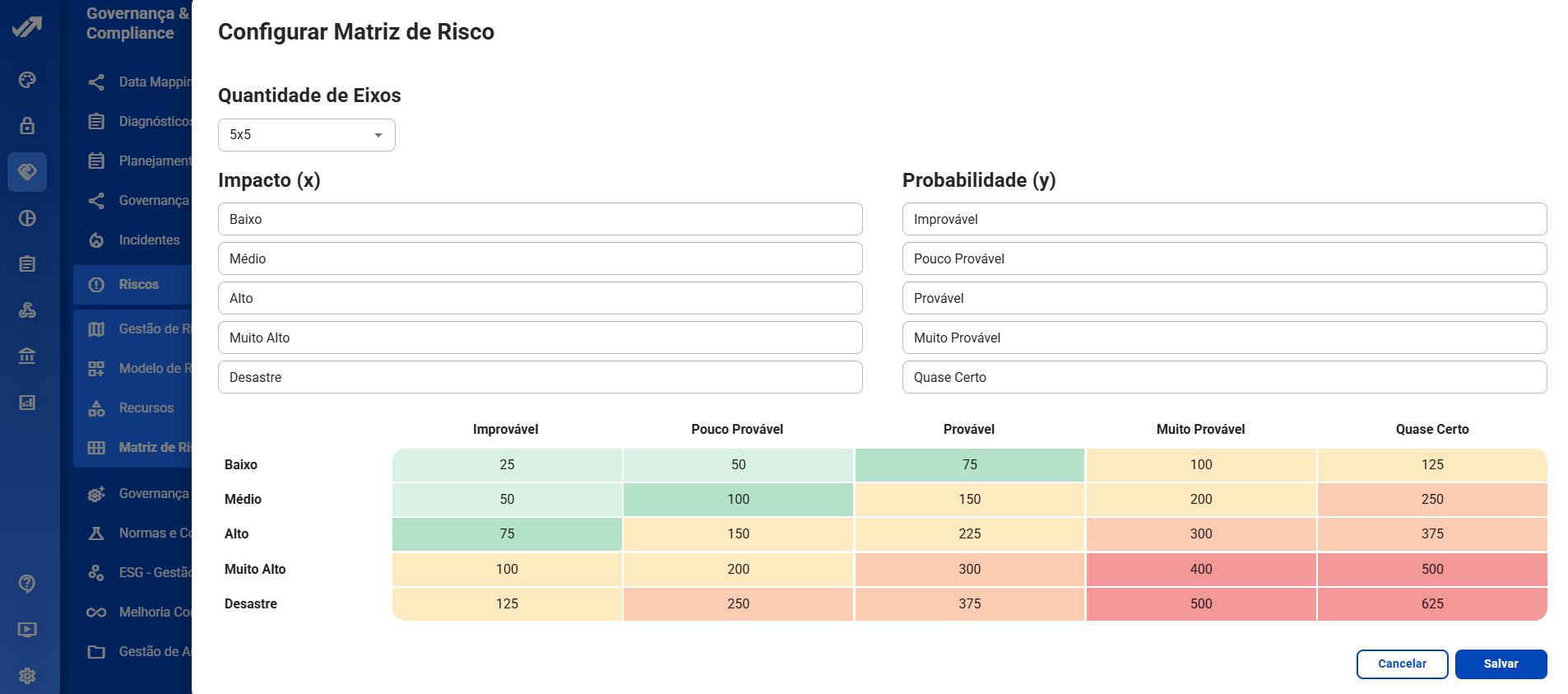
Visualize your third parties in an impact x probability matrix, with insights for prioritization.
Document the evolution of each risk and the actions taken to mitigate it.
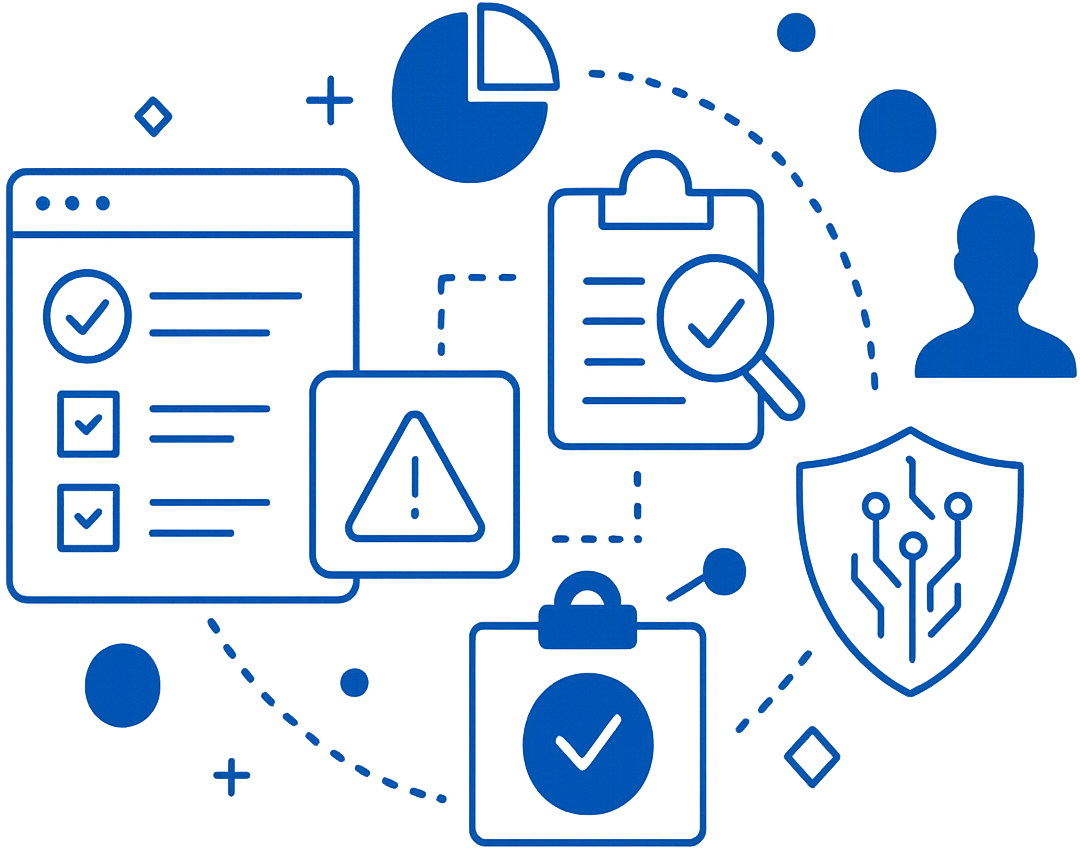
Apply automated diagnostics to suppliers, generate maturity indicators, and link the results directly to risk management.
The combined use of modules Diagnostics e GRC It guarantees traceability, objective criteria, and data-driven decisions.
This module is suitable for organizations with long supply chains, data operators, and partners: industries and rental companies, banks and cooperatives with correspondents and service providers, hospitals with affiliated laboratories and clinics, retailers with outsourced logistics and marketing, dealerships with contractors and call centers, educational groups with teaching platforms, and universities with collaborative research. It also serves software companies that, as operators, need to demonstrate to their clients how they manage their own subcontractors.
A LGPD It holds the controller responsible for the processing carried out by operators on its behalf (articles 39 and 42), requires that the sharing have a legal basis and purpose (articles 7 and 26), and that security measures cover the entire chain (article 46). ANPD guidance on data processing agents It details the roles of controller, operator, and sub-operator. GDPR (art. 28) requires sufficient contracts and guarantees from processors, and the ISO / IEC 27701 It includes controls for supplier relationships.
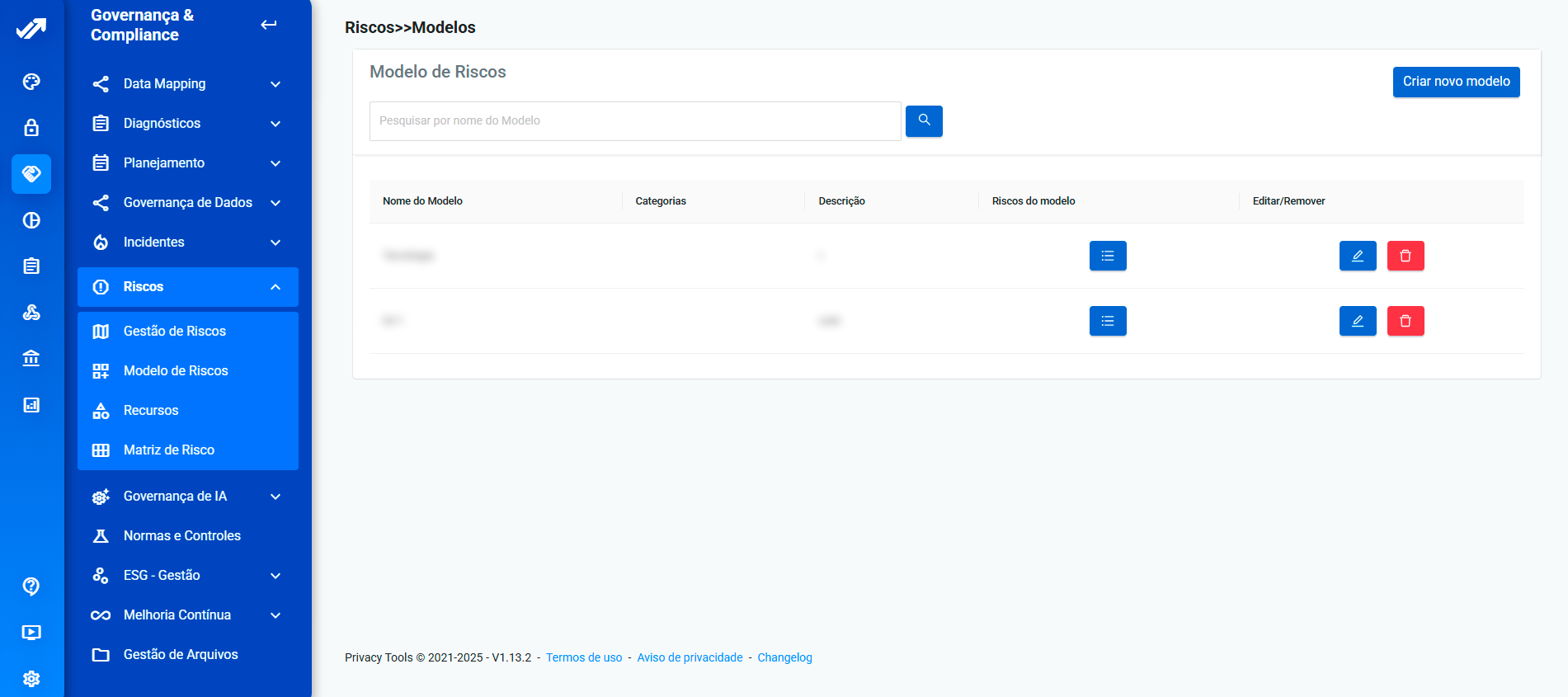
The module uses the forms from Diagnoses and Assessments, records the risks in the same structure as Risk management, links each third party to the activities of Data Mapping in which he appears as the operator and feeds the Incident Management when the violation occurs in the chain. The indicators go to the Business Intelligence.
A Mills The platform unified data protection operations and the supplier lifecycle, "bringing medium- and long-term benefits, both in terms of compliance with the LGPD (Brazilian General Data Protection Law) and internal productivity." RBS GroupSupplier due diligence has been part of the privacy program since the diagnosis. Read also Third-party management in 5 steps e The role of assessment in third-party management..
It is the ongoing process of assessing and addressing the risks that suppliers, data operators, and partners pose to your company's privacy and compliance, based on objective criteria.
Through the import and structured registration of your supplier database, with automatic links to treatment areas and types.
Customized forms and diagnostics assess each third party and generate a risk score. Risks can be classified by impact, probability, status, service type, or criticality and visualized in an impact x probability matrix.
You define action plans with assigned responsibilities, deadlines, and mitigating actions, along with approval workflows. The history and audit trail document the evolution of each risk and the actions taken.
Yes. The diagnostics generate maturity indicators linked to risk management, and the Data Mapping module connects third parties to the processing activities of your privacy program.
Risk Management addresses all organizational risks. Third-Party Risk Management focuses on each supplier: registration, evaluation, scoring, and action plan for each relationship. The risks identified here are included in the same GRC matrix.
Classifying by criticality and applying batch assessments to third parties that process personal data. The questionnaires are answered by the supplier themselves, the score is calculated by the platform, and the processing tasks are automated.
No. It records the assessment, the risk, and the action plan, which may include contract adjustments. The documents and evidence are attached to the third party's file.
Yes. A reassessment can be triggered by an event (incident, change of scope, renewal) or by a period, and the history shows the evolution of the score and actions throughout the relationship.
Typically, the Data Protection Officer (DPO) and the purchasing or legal departments, with involvement from the departments that contract the third-party service, are responsible. Access profiles define who registers, evaluates, and approves.
Request a demo and see how... Privacy Tools It can transform external risks into strategic and verifiable decisions.