The European data protection regulation, a reference for the LGPD (Brazilian General Data Protection Law) and applicable to Brazilian companies that serve people in the EU.
GDPR is the General Data Protection Regulation (Regulation (EU) 2016/679), the European Union's personal data protection standard, in force since May 25, 2018, which defines legal bases, rights of data subjects, obligations of controllers and processors, and fines of up to 4% of global turnover.
The LGPD (Brazilian General Data Protection Law) was inspired by the GDPR (General Data Protection Regulation), and the two laws share a similar structure. The differences lie in the deadlines (one month versus 15 days), the amount of fines, the representative in the EU, and obligations such as the DPIA (Data Protection Impact Assessment) and the 72-hour notification of violations.
The official text is in EUR-LexArticle 3 defines the territorial scope, which includes companies from outside the EU that offer goods or services to people in the bloc or monitor their behavior; Article 6 sets out the legal basis; Articles 12 to 22 cover the rights of data subjects; Article 30 covers the registration of activities; Article 33 covers the notification of violations; Article 35 covers the DPIA; and Article 83 covers fines. GDPR: what it requires and how to comply It details the obligations.
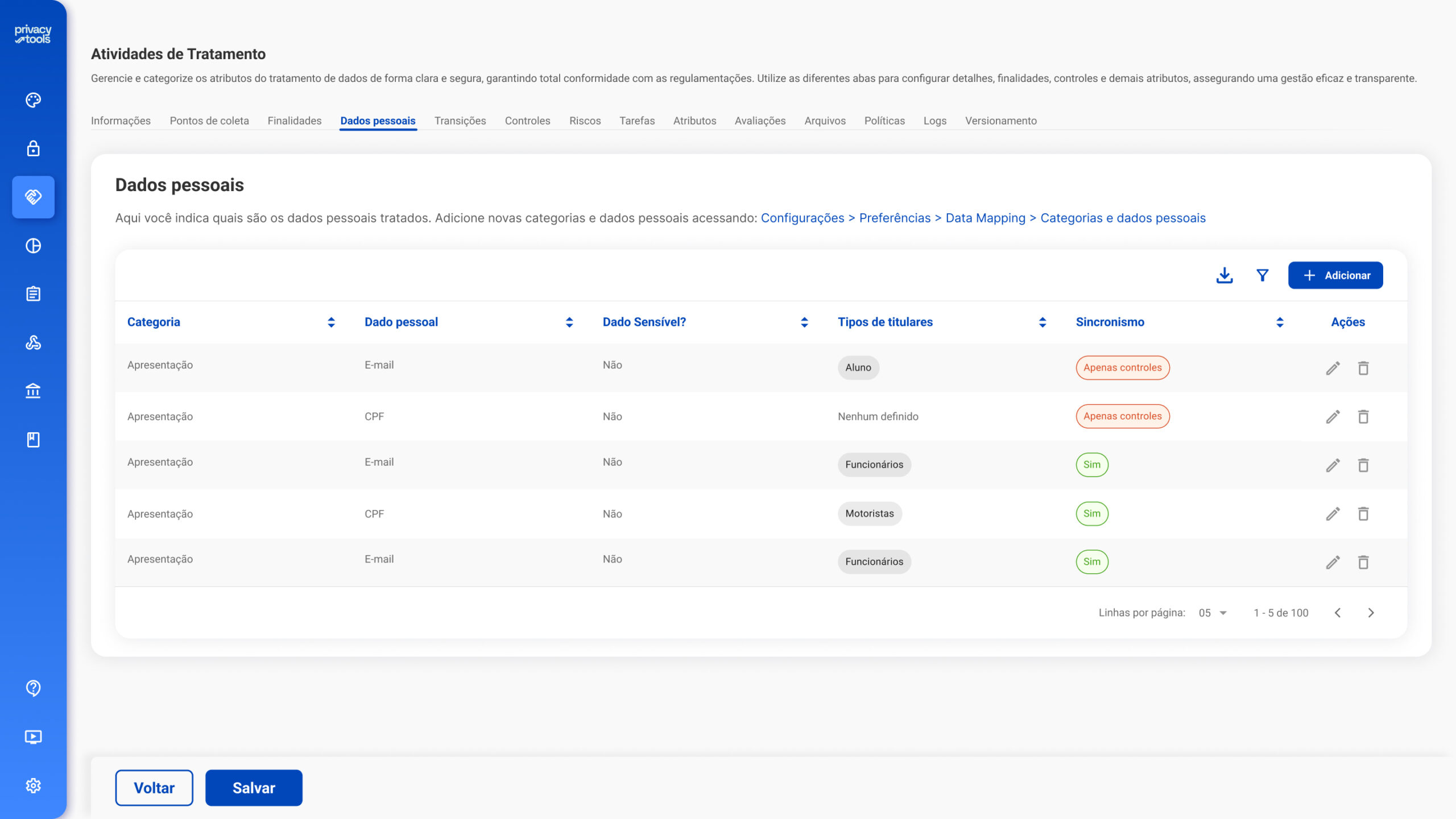
The platform handles both GDPR and LGPD in the same registration: Data Mapping for the registration of article 30, Management of Holders' Requests for a period of one month, Incident Management for notification within 72 hours and Diagnoses and Assessments for the DPIA.
International data transfer · RIPD · DSAR · AI Act · Back to glossary
Updated .
Request a demo and see how... Privacy Tools It organizes mapping, legal bases, rights holder applications, and evidence all in one place.