The test that substantiates and documents the use of legitimate interest as a legal basis for processing personal data.
LIA is an abbreviation for Legitimate Interest AssessmentThe assessment (or test) of legitimate interest. It is the document in which the controller demonstrates that it can process personal data based on legitimate interest, one of the legal bases in Article 7 of the LGPD, and that struck a balance between its interests and the rights and expectations of the data subject.
Article 10 of the LGPD (Brazilian General Data Protection Law) allows legitimate interest only for legitimate purposes, considered from concrete situations, and requires that only strictly necessary data be processed, that the controller adopt transparency measures, and that the authority may request an impact assessment report when the processing is based on this hypothesis. The ANPD (National Data Protection Authority) published a guidance document on the application of legitimate interest, with a step-by-step test.
Legitimate interest is the most flexible legal basis and, therefore, the one that demands the most accountability. The documented written test is evidence that the decision was well-founded and should be reviewed when the purpose or context changes. The result feeds into the... ROPA and, in cases of risk, the RIPD.
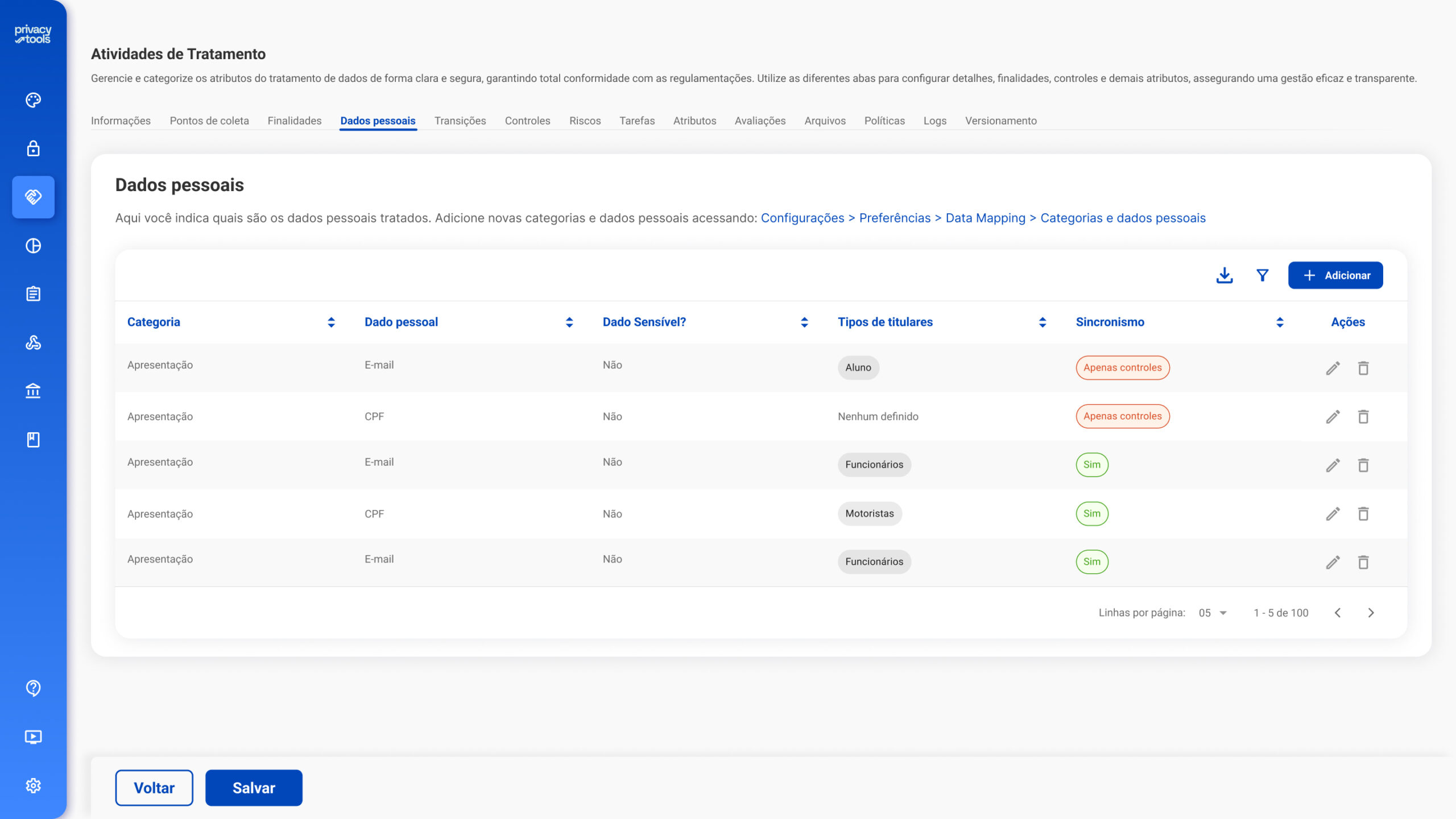
in the module Data MappingEach processing activity indicates the legal basis; when it is legitimate interest, the platform stores the proportionality test along with the activity, including the responses to the steps and the individuals responsible for the evaluation.
ROPA · RIPD · DSAR · Back to glossary
Updated .
Request a demo and see how Data Mapping documents legitimate interest on an activity-by-activity basis.