The categories of data that can generate discrimination and that the LGPD (Brazilian General Data Protection Law) addresses with more restrictive legal provisions.
Sensitive personal data is data concerning racial or ethnic origin, religious beliefs, political opinions, membership of a trade union or religious, philosophical or political organization, health, sex life, genetic or biometric data, linked to a natural person.
The list is exhaustive, but extensive in practice: a medical certificate, the fingerprint used in the electronic time clock, facial recognition for access, and disability information in a registration are all sensitive data.
Article 5, II, of LGPD Article 11 defines the categories and lists the circumstances under which processing is permitted: specific and explicit consent or, without consent, situations such as compliance with a legal obligation, protection of health, exercise of rights, and protection of life. Legitimate interest is not a legal basis for sensitive data. Article 11, § 4, prohibits the communication of this data between controllers for the purpose of economic advantage, and health insurance companies cannot use it for risk selection.
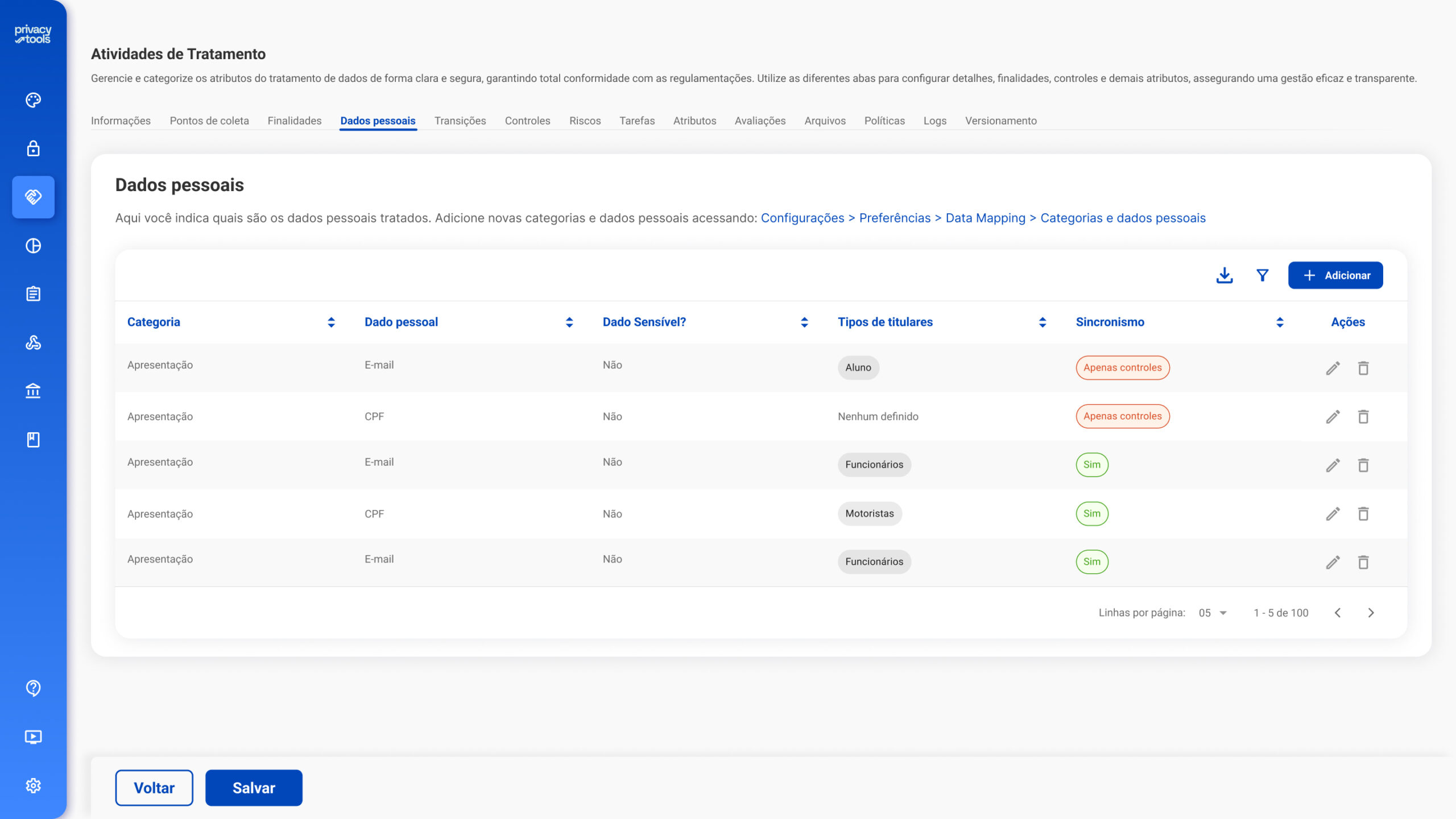
No Data Mapping Activities involving sensitive data are flagged and linked to the legal provision of Article 11; Data discovery identifies this data in databases and files; Diagnoses and Assessments They produce RIPD when the treatment generates high risk.
Personal data · Legal base · RIPD · Consent · Back to glossary
Updated .
Request a demo and see how... Privacy Tools It organizes mapping, legal bases, rights holder applications, and evidence all in one place.