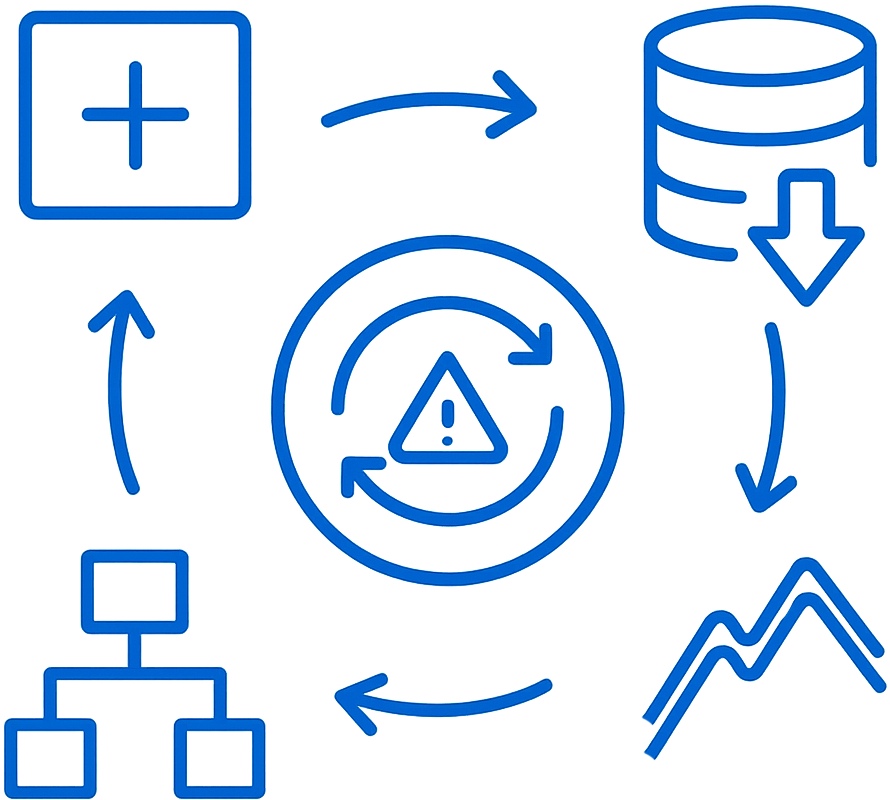
Risk Management (GRC) is the module of Privacy Tools that identifies, assesses, treats and monitors privacy and security risks based on ISO 31000.
Map, assess, monitor, and manage risks based on ISO 31000.
Direct integration with treatment activities, customizable workflows, and complete traceability.
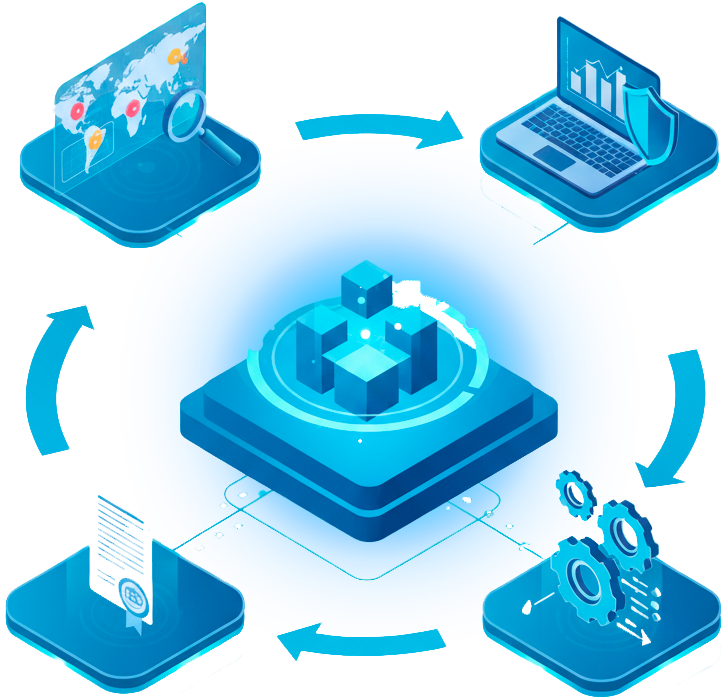
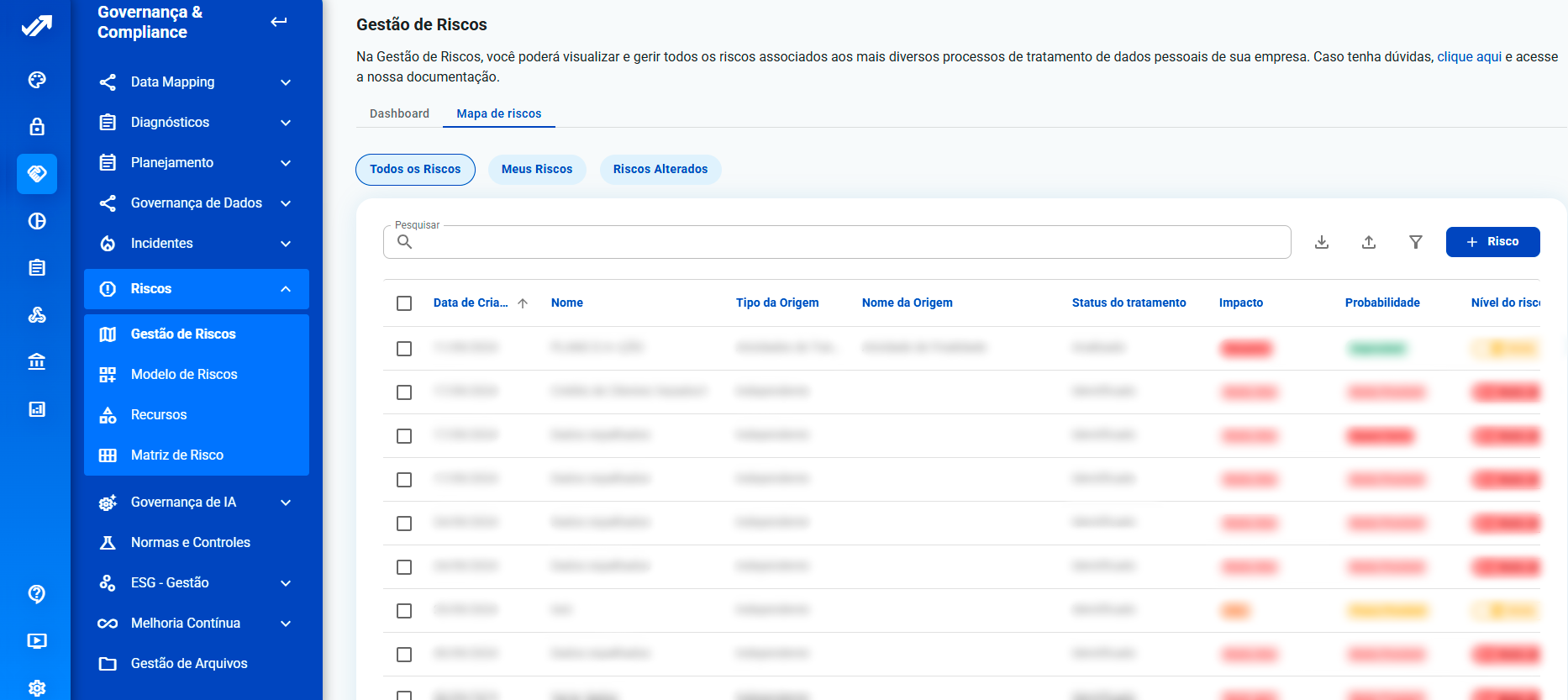
Companies that process personal data need more than policies and good intentions; they need a structure to... identify, classify and react risks in a continuous and auditable manner.
The module Risk management da Privacy Tools It centralizes this process with visibility, automation, and integration into the privacy governance program.
Explore the features that make this solution complete, practical, and efficient.

Classify by impact, probability, score, category, threats, causes, vulnerabilities, and more. Use custom fields to adapt to the reality of your operation.
All modifications to a risk are recorded and go through an approval workflow with complete history and logs.
Use the standard matrix or configure axes (impact × probability) with adjustable scores. Define scores and automatic actions by risk level.
Create risks in batches with automatic linking to categories, causes, assets, or treatment activities.
Track each risk by status (identified, analyzed, under treatment, under monitoring, or completed) with an action plan, mitigating actions, and defined deadlines.
Define responsibilities, deadlines, and guidelines for each risk level. Send automated task emails for each new occurrence.
Connect risks directly to mapped treatment activities, assets, and processes.
Gain scale and intelligence with global risks, automatic linking, and suggestions based on Data Mapping information.


The GRC module serves organizations that need to address privacy, information security, and compliance risks with the same rigor they already apply to financial and operational risks: financial institutions and cooperatives, health insurance companies, utilities, industries, technology companies, and public agencies. It is used by Data Protection Officers (DPOs), GRC and internal audit areas, information security and risk committees, and applies both to those structuring their first risk matrix and to those who need to migrate hundreds of risks from spreadsheets to an environment with an approval process.
A LGPD It requires security measures proportionate to the risks (art. 46), an impact report when the processing may generate risks to the data subjects (arts. 5, XVII, and 38), and a governance program that takes into account "the structure, scale and volume of its operations, as well as the sensitivity of the data processed and the probability and severity of the damages" (art. 50, § 2). ISO 31000 defines the risk management process that the module follows, and ISO/IEC 27001 and ISO / IEC 27701 They require assessment and treatment of documented risks.
The module receives suggested risks based on information from Data Mapping, from Diagnostics, Third Party Risk Management, AI Governance and the Incident Management...and returns the classification and action plan to them. The change log with approval trail and the dashboards of... Business Intelligence These are the documents that serve as evidence for boards, auditors, and certifications.
A Mills It highlights the ease of creating customized forms to assess risks and tailor the solution to your specific needs. CopelThe privacy governance program was implemented "in accordance with the requirements set forth in Article 50 of the LGPD," which includes risk assessment. See others. success cases and the page of regulations and frameworks supported.
Yes. The risk structure is based on ISO 31000, with a configurable risk matrix and resources aligned with corporate governance practices.
Yes. Risks can be directly linked to mapping processes, assets, or other platform entities.
Yes. You can import risks with their respective categories, causes, controls, and links using the platform's standard spreadsheet.
No. The ISO 31000-based framework accepts risks related to privacy, information security, compliance, third parties, AI, and ESG, with customized categories and fields. The advantage is that it addresses them in the same environment where the data processing activities are mapped.
The standard matrix combines impact and probability; the axes, scores, and score ranges are configurable. The resulting score can trigger automatic tasks, such as requiring an action plan or approval for critical risks.
Every modification goes through an approval workflow defined by the organization and is recorded with complete history and logs: what changed, who changed it, who approved it, and when.
Yes. Bulk import uses a structured spreadsheet with risks, categories, causes, controls, and links, and the records arrive ready for review on the platform.
The impact report is generated in Data Mapping from the mapped activities; Risk Management provides the assessment and mitigation measures that are included in this report.
Plan audits based on the most critical risks, assign responsibilities, and record corrective actions with traceability.
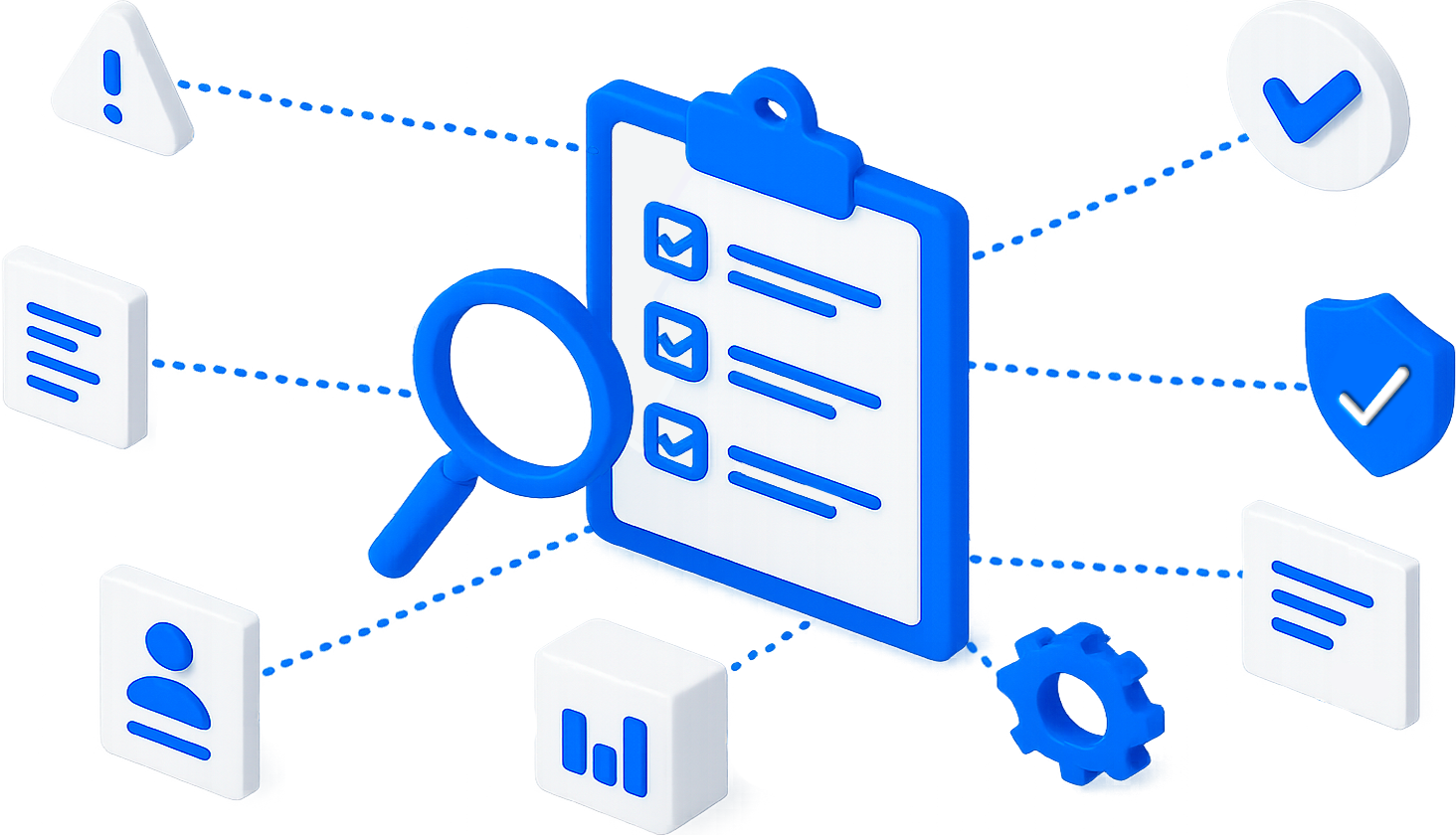
Request a demo and see how Risk Management can strengthen your company's regulatory maturity.