ROPA is the module of Privacy Tools which generates and maintains the Register of Personal Data Processing Activities, as required by Article 37 of the LGPD and Article 30 of the GDPR.
The Data Processing Activities Log (DPL) is one of the cornerstones of compliance with legislation such as the LGPD and the GDPR. Privacy ToolsYour company structures and maintains ROPA in a practical, centralized, and scalable way, directly within the module. Data Mapping.
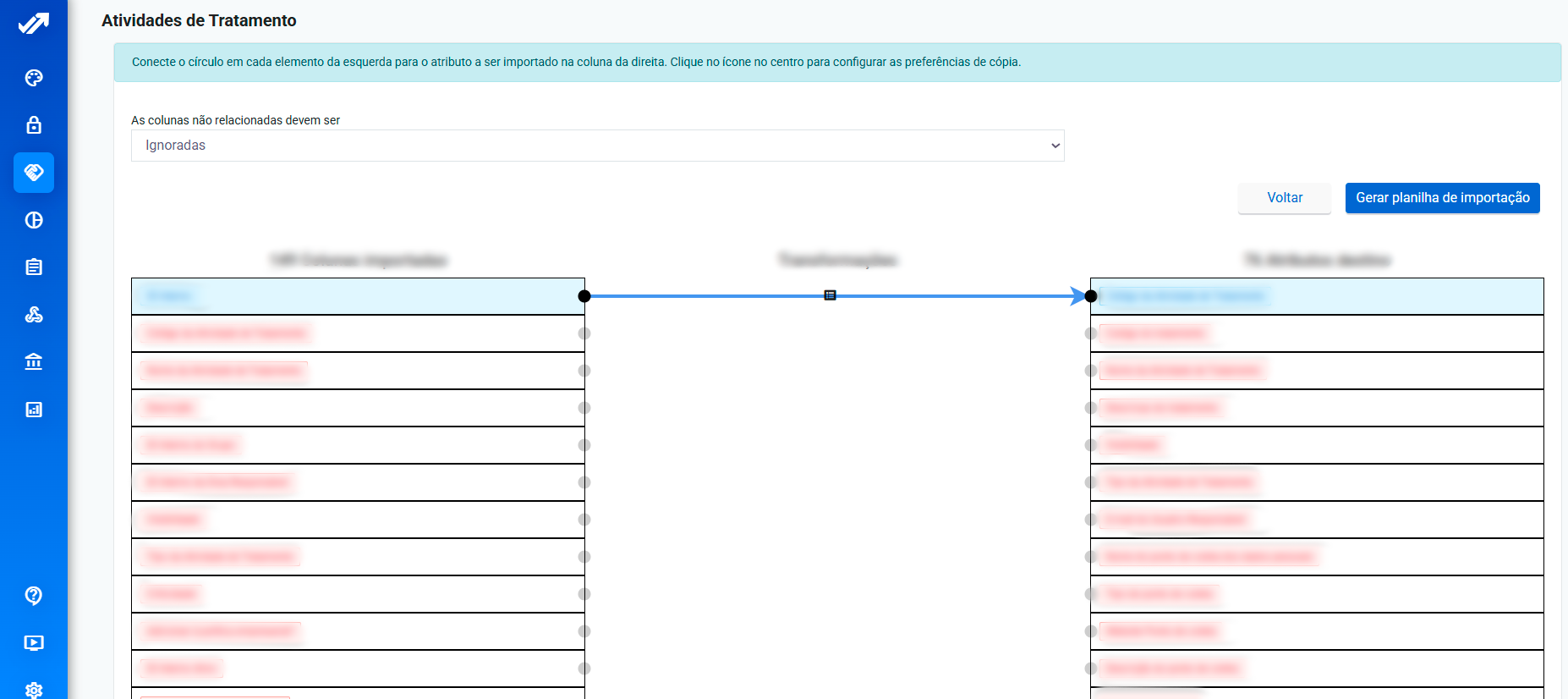
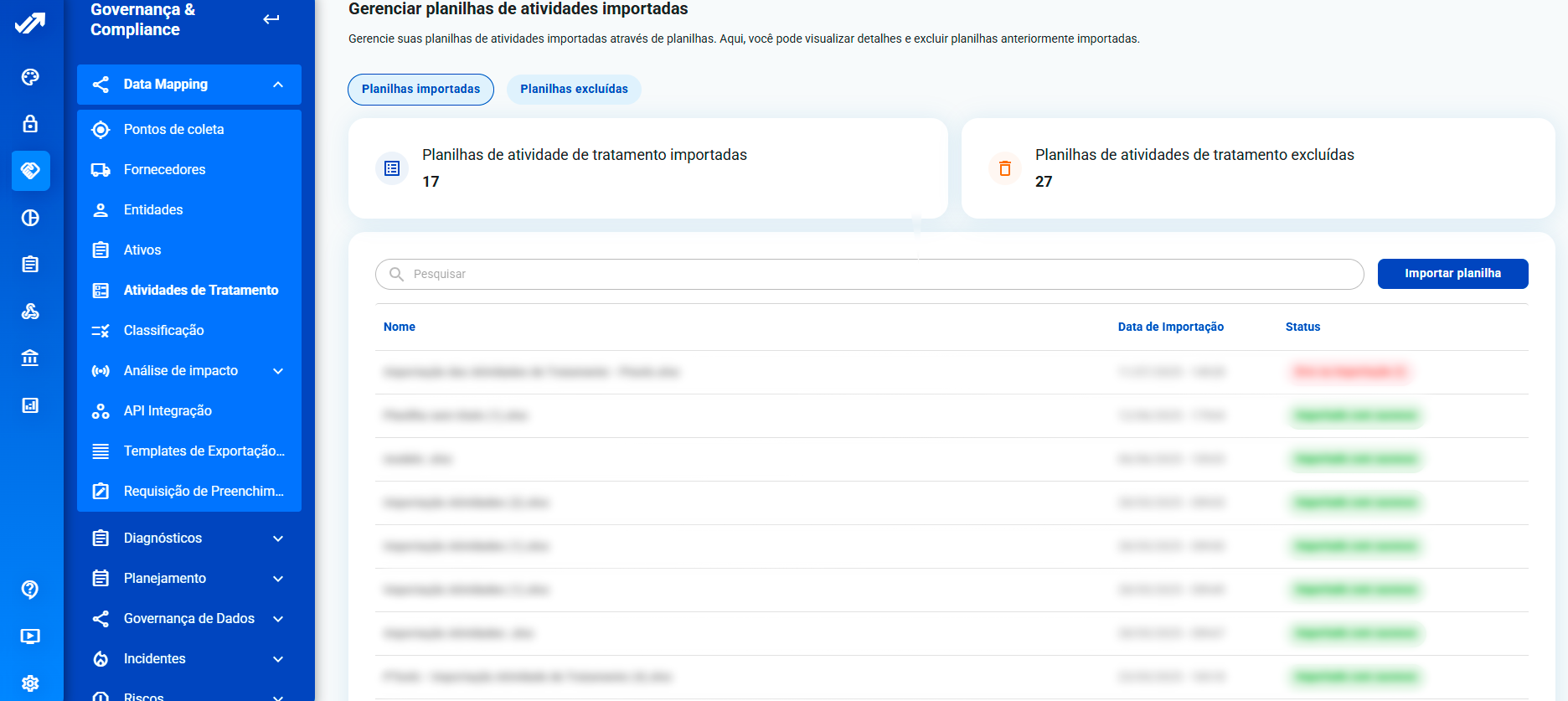
Import, update, and manage hundreds of records securely, with historical versioning and inspection-ready reports.
The ROPA (Record of Processing Activities) is the document that describes the personal data processing activities carried out by an organization.
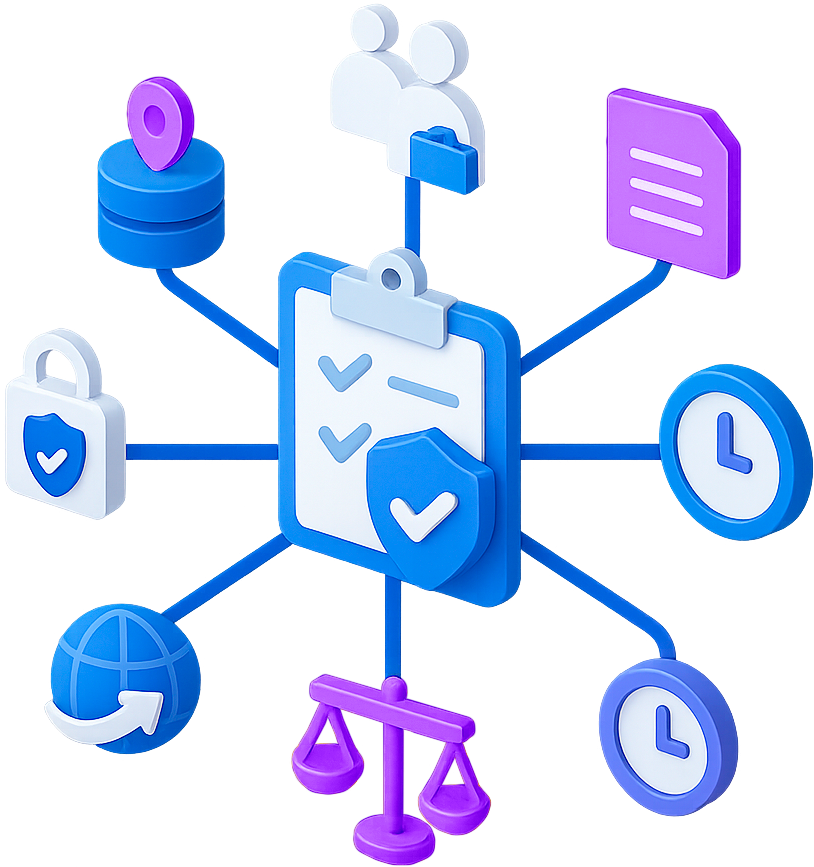
The required fields include:
Companies of any size must keep this record up to date to demonstrate compliance to authorities.
With Privacy ToolsThe process of creating or migrating your ROPA is simple from the start:
The platform automatically organizes data by activity, collection point, legal basis, risks, and much more, without losing traceability.
The ROPA functionality within the Data Mapping module is connected to features that enhance the maturity of your operation:
ROPA is mandatory for controllers and operators of any size, but the challenge is greater for those with many activities, many areas, and many systems: healthcare groups, banks and cooperatives, retailers, dealerships, universities, industries, and public agencies. It is also the document that data operators, such as software companies and service providers, most need to present to their clients. The tool serves both those creating their first record and those needing to migrate old spreadsheets to a live environment.
Article 37 of LGPD It stipulates that "the controller and the operator must keep a record of the personal data processing operations they carry out, especially when based on legitimate interest," and Article 38 allows the ANPD (National Data Protection Authority) to request an impact assessment report, which is part of this record. CD/ANPD Resolution No. 2/2022 It provides for simplified registration for small-scale agents. GDPRArticle 30 lists the fields of the registry: purposes, categories of data subjects and data types, recipients, international transfers, retention periods, and security measures.
ROPA feeds the Impact Report (RIPD), Risk management, Third Party Risk Management (operators listed in the shares), a Incident Management (activities affected) and the DSAR (where the policyholder's data is located). Coverage and review indicators appear in Business Intelligence.
O Sicoob Central Crediminas imported 16 customized processes to move away from a manually conducted project. Eletrobras obtained “a more detailed mapping of treatment activities”. For the concept, read What is ROPA under the LGPD? and the entry ROPA from the glossary.
Yes. Article 37 of the LGPD (Brazilian General Data Protection Law) mandates that both the controller and the processor maintain records of data processing operations. Companies of any size must keep these records updated to demonstrate compliance to the authorities.
Within the Data Mapping module, the platform automatically organizes data by activity, collection point, legal basis, risks, and other fields, in a centralized, traceable, and scalable way.
Not. THE Privacy Tools It allows for direct import of spreadsheets, with automatic validation, bulk updates, and compliance with regulatory requirements.
Yes. The record remains active, auditable, and connected to the rest of the privacy program, with traceability of changes and those responsible.
Yes. The LGPD (Brazilian General Data Protection Law) requires the registration of all controllers and operators; Resolution CD/ANPD No. 2/2022 allows for simplified registration for small-scale agents. The platform supports both formats.
Activity, purpose, legal basis, data categories and data subjects, systems involved, data sharing and operators, international transfers, retention periods, and security measures. The platform organizes these fields automatically.
Whenever an activity changes, and at a minimum, during periodic reviews defined by the organization. With assigned responsibilities and deadlines for each activity, the record ceases to be a snapshot and begins to reflect the operation.
Yes. The record can be exported in full or by area, with the version history, and it is the document that operators most often present to clients.
No. The ROPA is the record of all activities (art. 37). The RIPD is the impact report on treatments that may generate risks to data subjects (arts. 5, XVII, and 38), prepared based on the recorded activities.
If you already have a map in spreadsheets, the Privacy Tools It allows for direct import, with automatic validation, bulk updates, and compliance with regulatory requirements.
Keep your ROPA alive, auditable, and connected to your privacy program.