
O cenário tecnológico está em constante evolução, moldando o futuro das empresas e da sociedade como um todo. O Instituto Gartner, recentemente abordou 10 tendências tecnológicas que devem estar em pauta em 2024. Essas tendências prometem impactar significativamente as indústrias e influenciar a forma como vivemos e trabalhamos.
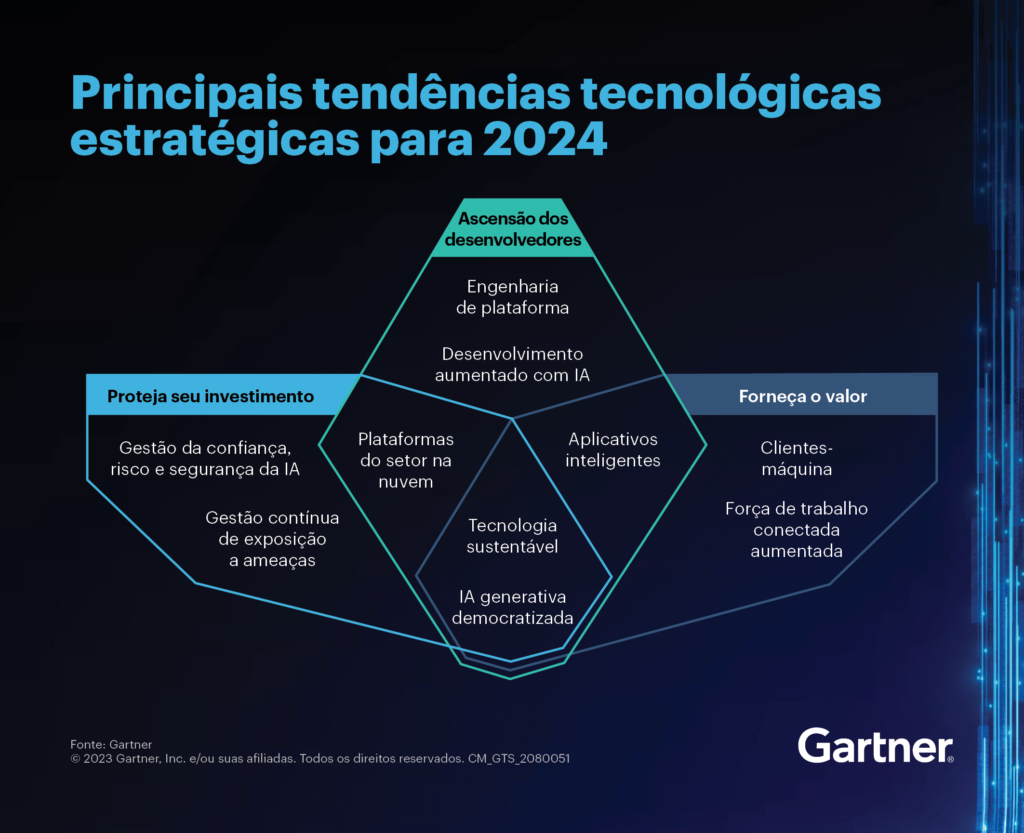
Fonte: Gartner
Confira as tendências tecnológicas:
1) Proteja seu investimento:
- Gestão da confiança, risco e segurança da IA (AI TRiSM)
A tendência AI TRiSM destaca que organizações centradas em transparência, confiança e segurança em IA terão ganhos de 50% até 2026. No entanto, a gestão de riscos é essencial para evitar falhas e perdas, otimizando a adoção e metas de negócios na era da IA.
- Gestão contínua de exposição a ameaças (CTEM)
Em 2024, a defesa contra ameaças cibernéticas permanecerá prioritária para as empresas. Dessa forma, a previsão é de que as organizações mantenham investimentos em estratégias de vigilância constante, monitorando ativos físicos e digitais para garantir segurança.
2) Ascensão dos desenvolvedores:
- Tecnologia sustentável
A Tecnologia Sustentável envolve escolher ferramentas e parceiros eficientes para obter ótimos resultados com recursos mínimos. Além disso, o crescimento do movimento ESG incentiva líderes de TI a considerar impactos sustentáveis ao implementar soluções de nuvem e IA, promovendo decisões conscientes em termos ambientais, sociais e de governança.
- Engenharia de plataforma
A engenharia de plataforma busca acelerar a entrega de aplicativos, aprimorar a experiência do desenvolvedor e otimizar o valor ao cliente. Dessa forma, a expectativa é que até 2026, 80% das grandes organizações de engenharia de software planejam equipes de engenharia de plataforma, visando resolver desafios de cooperação entre desenvolvedores e operadores. A automação e a IA generativa são essenciais nesse avanço.
- Desenvolvimento aumentado com IA
Desenvolvimento Aumentado com IA usa tecnologias como inteligência artificial para ajudar engenheiros de software. Além disso, até 2028, cerca de 75% dos engenheiros de software empresarial devem usar assistentes de codificação de IA, mostrando rápida integração para impulsionar eficiência e inovação.
- Plataformas Industriais em Nuvem
A estratégia visa alinhar resultados de negócios ao setor, integrando SaaS, PaaS e IaaS. Até 2027, mais de 50% das empresas devem adotar plataformas de setor na nuvem, impulsionando transformações e eficiência operacional.
- Aplicativos inteligentes
Os Aplicativos Inteligentes são apps enriquecidos com inteligência artificial e dados externos. Até 2026, espera-se que cerca de 30% dos novos aplicativos usem IA para criar interfaces de usuário adaptativas, um aumento significativo em relação aos atuais menos de 5%. Essa tendência reflete a crescente adoção da inteligência artificial para proporcionar experiências de usuário mais dinâmicas e personalizadas, conforme indicado pelo Gartner.
- IA generativa democratizada
A Democratização da IA Generativa refere-se à criação de diversos conteúdos, como imagens e texto, tornando-se uma tendência crucial. Dessa forma, até 2026, espera-se que mais de 80% das empresas usem interfaces de programação baseadas em IA generativa, implementando modelos em ambientes de produção. Esse aumento expressivo, comparado aos atuais menos de 5%, destaca a rápida adoção e transformação significativa impulsionadas pela IA generativa nas empresas.
3) Forneça o valor:
- Força de trabalho mais conectada
A Estratégia de Força de Trabalho Conectada visa otimizar a equipe, integrando tecnologia, análise da força de trabalho e desenvolvimento de habilidades. Além disso, até 2027, espera-se que 25% dos diretores de TI adotem essa abordagem, reduzindo pela metade o tempo para competência em funções cruciais, promovendo eficiência, adaptabilidade e resposta ágil às demandas do mercado.
- Clientes-máquina
Algumas empresas devem implementar aplicações que podem fazer compras de materiais necessários para a companhia de forma automatizada. No entanto, essa transição ocorrerá à medida que as aplicações ganhem a capacidade de acessar bancos de dados de finanças de clientes e fornecedores.
Em resumo, as tendências tecnológicas destacadas pelo Instituto Gartner para 2024 refletem a constante busca por inovação e a adaptação às demandas em evolução da sociedade. Dessa forma, à medida que nos aproximamos deste futuro tecnológico, é crucial que empresas e indivíduos estejam preparados para abraçar essas mudanças, explorando novas oportunidades e mitigando os desafios associados. A colaboração entre setores, a educação contínua e a adaptação ágil são chaves para prosperar em um cenário tecnológico em constante transformação.