Em agosto de 2020 entra em vigor a Lei Geral de Proteção de Dados no Brasil. Ela vai impactar todas as empresas que lidam com informações pessoais, desde uma loja até um portal de notícias que utiliza cookies e formulários. A nova lei irá mudar a forma com que as empresas se relacionam com os clientes, aumentando a transparência e a confiança que o público tem nas marcas na hora de conceder informações pessoais. Quem não se adequar à LGPD pode sofrer penalidades, como bloqueio de coleta de dados, e multas.
Para um site estar em conformidade com a lei, é preciso que o usuário saiba quais dados estão sendo coletados sobre ele, como o comportamento dele dentro da página, seu histórico, interesses, localização, dispositivo, sistema operacional, etc. Muitas vezes tudo o que o usuário precisa saber sobre a gestão de seus dados estará na Política de Privacidade, na Política de Cookies e nos Termos de Uso. Se o seu site ainda não conta com essas documentações, aproveite esse tempo antes da vigência da lei para elaborar esses materiais.
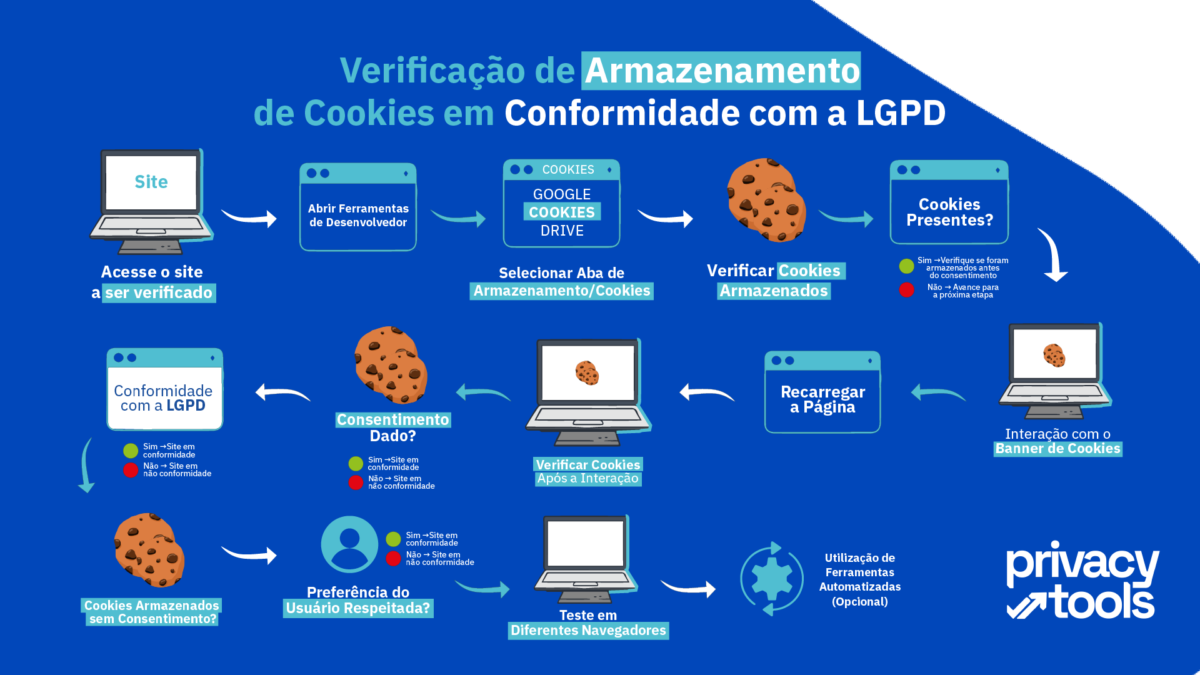
Saber, porém, não é o suficiente: a pessoa que visita seu site precisa dar consentimento para a coleta de informações sobre ela. E esse consentimento não pode ser obrigatório para acessar a página, ou seja, se o usuário decidir não compartilhar seus dados por meio dos cookies ele deve poder usar o site normalmente.
Fazendo o diagnóstico do site
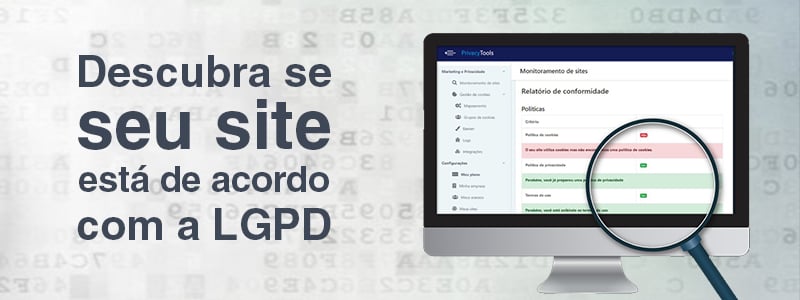
Antes de tudo é preciso saber o quanto o seu site já está em conformidade com a LGPD. Para isso é necessário checar os critérios que são pedidos pela lei. Um diagnóstico de sites que visa a proteção de dados irá identificar os cookies que coletam informações pessoais, a presença de um banner de consentimento para o uso deles, os links para as políticas de privacidade, os formulários, entre outros aspectos.
A Privacy Tools oferece esse diagnóstico gratuito para qualquer tipo de site. Basta fazer um cadastro na plataforma e cadastrar até um domínio por usuário. O diagnóstico fica pronto em minutos e mostra todos os pontos de não conformidade, para serem melhorados até a vigência da lei em 2020.
Criando as suas políticas
Como já mencionamos, as políticas de privacidade e similares precisam conter todas as informações que o usuário deve saber sobre a coleta e o uso de seus dados. Por isso, cada site deve conter uma página com essas políticas, além de elas estarem linkadas no banner de consentimento do uso de cookies.
Na plataforma da Privacy Tools, os clientes que já assinaram algum de nossos planos têm acesso aos modelos prontos de políticas. Eles foram elaborados pela equipe jurídica da plataforma para serem personalizados por cada cliente. O próprio sistema da Privacy ainda faz o link para as políticas dentro do banner de consentimento de cookies, para que os usuários tenham acesso a mais informações antes de aceitar ou não a coleta de dados.
Cuidado com os formulários
Uma forma bem comum de coletar informações de clientes, os formulários servem para ter o contato de quem pediu um orçamento, um material, etc. Porém, quem preenche um formulário também precisa dar consentimento para que esses dados sejam usados pela empresa.
Para que seu site esteja em conformidade com a LGPD, os formulários devem ter a opção para o usuário confirmar se deseja receber e-mails, mensagens, SMS, etc. O usuário também deve saber que pode revogar o consentimento a qualquer momento, caso não queira mais receber conteúdos de sua marca. Em cada e-mail enviado deve haver um link de cadastro para que ele saia da sua lista de contatos.
Por fim, o importante é que todos os sites preservem uma relação de transparência com os visitantes quando o assunto é a coleta e o uso de seus dados. Isso aos poucos se tornará uma cultura para que a privacidade online seja respeitada e as pessoas possam ter mais consciência sobre o que está sendo coletado sobre elas.