Com a Lei Geral de Proteção de Dados (LGPD), a mudança na cultura de tratamento de dados e a conformidade, entram em foco. Realizar um mapeamento detalhado dos dados que sua empresa coleta, bem como o seu tratamento, é essencial. É necessário saber desde onde os dados estão armazenado e quais as pessoas que possuem acesso a eles, até o seu descarte e eventuais compartilhamentos.
Como tornar essa tarefa mais fácil? Através da gestão e automação do mapeamento dos dados. A partir de um mapa onde contenha o fluxo dos dados dentro da organização, é possível ter uma visão unificada do inventário da empresa.
Automação
Com uma rápida pesquisa no Google, você encontra automação sendo definida como: “Um sistema que utiliza processos automáticos que comandam e controlam os mecanismos para seu próprio funcionamento”. Ou seja, um sistema que faz uso de técnicas computadorizadas ou mecânicas que tem como objetivo otimizar tempo, reduzir custos e focar na qualidade do que se está produzindo.
Benefícios de utilizar automação
- – Melhorar a produtividade de uma empresa e seus setores, aumentando produção, gerenciando dados e os resultados alcançados;
- – Reduzir os custos de produção e aumentar a qualidade;
- – Melhorar as condições de trabalho das pessoas eliminando trabalhos repetitivos, manuais e aumentado a segurança;
- – Realizar operações que seriam impossíveis de controlar intelectualmente ou manualmente;
- – Melhorar a disponibilidade de informações de forma com que seja possível fornecer no momento e no formato adequado;
- – Simplificar a operação e manutenção de modo que o operador não precise ter grande expertise ao manusear o sistema.
Mas como a automação se encaixa dentro da plataforma de gestão de conformidade da Privacy Tools?
O Mapeamento de dados é uma atividade que demanda bastante tempo e esforço por parte da organização, uma vez que serão verificados e avaliados todos os processos de coleta de dados da empresa.
Uma ferramenta que possa facilitar e automatizar algumas etapas deste processo é fundamental neste aspecto, e é visando isso que a Privacy Tools desenvolveu seu Data Mapping, auxiliando no mapeamento e classificação destes dados e permitindo a análise dos mesmos através de relatórios e dashboards que permitem a organização visualizar e tomar decisões de forma mais qualificada e assertiva.
Assim, todo mapeamento realizado trará resultados analisáveis, permitindo que a empresa tome decisões mais rápidas sobre o tratamento de dados:
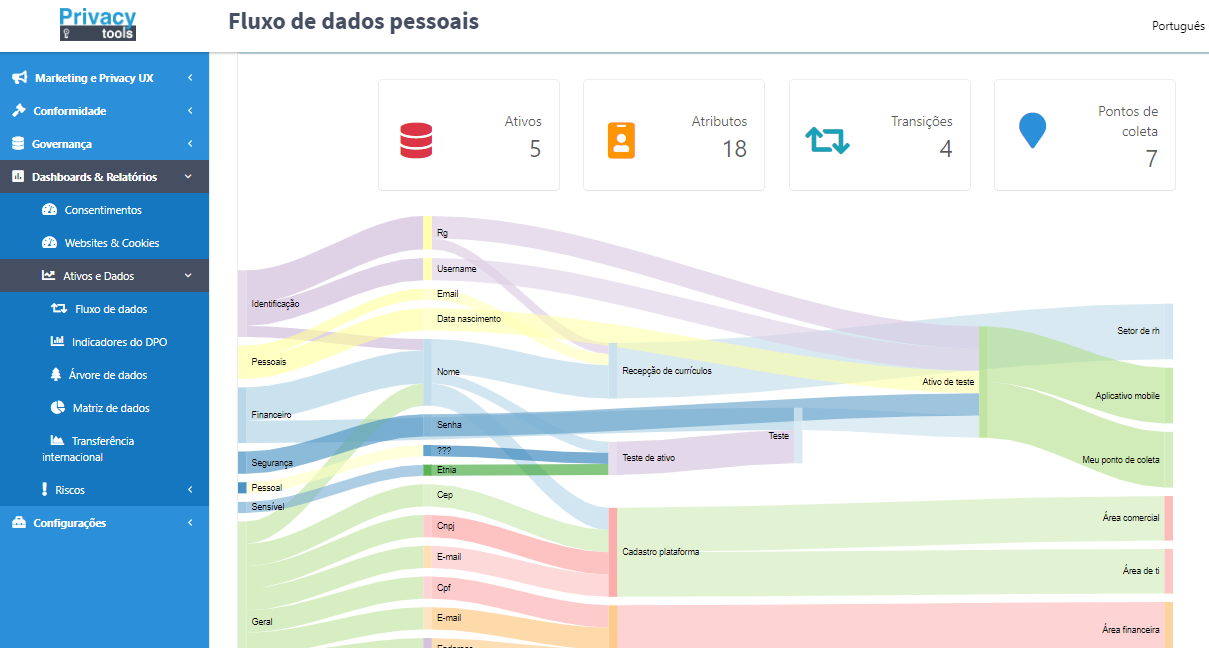
Além disso a ferramenta permite automatizar e configurar relatórios tais como DPIA e LIA e outros, permitindo inclusive a extração destes para apresentação caso necessário.